News


New Faces

| by Mie Hansen

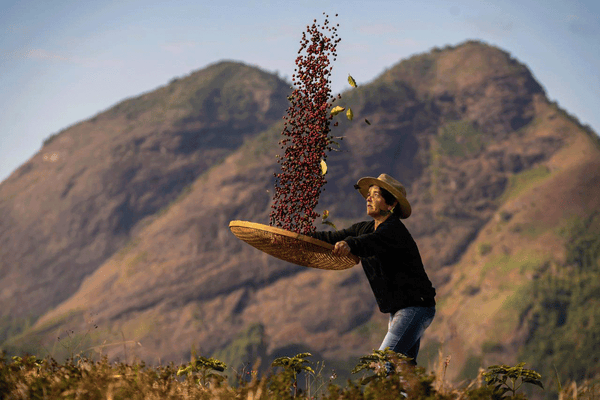
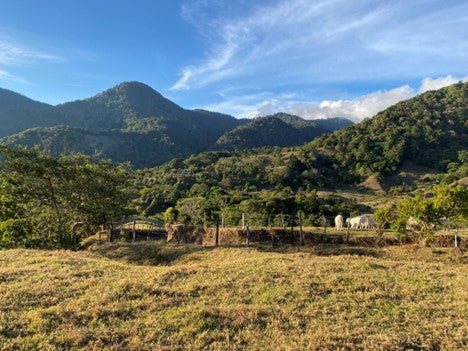
For us, it has been a really fun and exciting process - going from offering coffees produced by a selection of producers within a grower association to narrowing down to offering single producers within the growers associations we are working with in Colombia. So far, four producers within the Los Cauchos group has stood out for us and we will start with releasing Orlando Ordonez’ coffee from his farm, which he calls El Diviso.

The producers deliver their dried coffee to the warehouse of our exporter in the town of Pitalito - the second biggest city in the Huila region with around 100 000 people. At the warehouse, William Ortiz is the cupper and consequently cups all coffee arriving to the warehouse. He’s not only responsible for cupping the coffee, but also does a physical analysis, moisture readings, facilitates logistics and makes sure the head office in Bogota is oriented and up to date on what he is purchasing. A very impressive amount of work! We visited William twice last year and tasted coffees together, so he will be able to help us find the lots we are looking to buy - and together with the lab in Bogota, he’s been helping us narrowing down the selection to taste through to find good coffees.


The other part we love about working with small producers, is our exporter’s ability to offer support from an agronomist. When I visited Huila in November last year, we went around to farms, where he does an evaluation of potential and performance. For example, he teaches our producers how to collect soil samples, so that they can buy the optimal fertilizers instead of generic ones that might be stressing the soil and not benefiting the trees as they should.


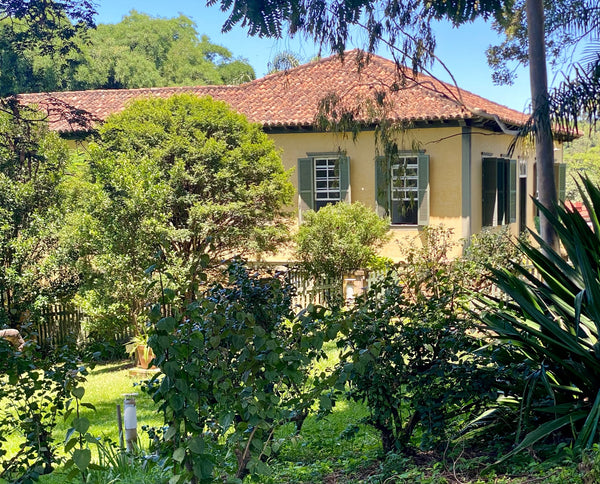
In addition to the smallholder farmers and growers associations we work with south in Huila, we will be offering an organic coffee from the region of Santander where the farm El Roble is situated. With it’s 740 acres, it is a huge farm, and we select from day lots when we make up our blend of coffee from the farm.

We are very happy to be able to offer these coffees through the spring - it takes a lot of work for all of us to find coffee good enough to stand out like this, but if it ends up with a long-term, committed relationship for both of us, it is definitely worth our efforts.

Guatemala Harvest 2012

| by Mie Hansen

During the harvest of 2011 we ended up with coffees from two different areas of Guatemala - Huehuetenango and Antigua. I’ve often thought that if we could buy coffee from only one country, Guatemala would be an excellent choice because it offers so many various flavor profiles. But don’t worry - we will keep focusing on having a diverse representation of all the coffee growing regions. Like last year, we will continue to buy from La Bolsa in Huehuetenango, and as harvest just started a few weeks ago, we will soon be starting to see samples to taste and review in our lab at the roastery. When I visited La Bolsa earlier this month, we walked all over the farm, and we will start a project with a lot they call Ventana Grande - the big window. La Bolsa got it’s name from being surrounded by mountains, so that the farm itself is literally in a bag. At the highest elevated part of the farm, the mountain forms a window that you can walk through, and on the other side the Ventana Grande lot. After picking, we will try a special preparation of the Ventana Grande where we will focus in particular on drying of the wet parchment. After La Bolsa I continued to visit two of their neighbors where we have other scintillating plans for special preparations, but more about that another time. A couple of more interesting projects are lining up both in Huehuetenango and near lake Atitlan, but we will let that be a pleasant surprise when the coffees arrives.


From Antigua we have established and will continue our relationships with Pulcal, Retana and San Juan and I spent the days visiting the farms and cupping coffee at our exporter’s office. Here, harvest was in full swing, and some of the best coffees I cupped continued to be from these farms. Different from the two other farms which have been well run for generations, San Juan is a special project run by Luis Pedro Zelaya Zamora where he is leasing the land and managing the farm. The amount of labor he puts in to refining the agricultural practices at this farm is astonishing - from incorporation of organic matter to the soil to management of shade trees and harvesting. Expect nothing but exceptional coffees from these Antigua farms this year.


-Mie

Honduras Harvest 2012

| by Mie Hansen

Excuse my slack behavior, but it's been a couple of those weeks where my job for once resembled what people think it is like. I've been in Honduras, and it's been raining a lot, so my excuse number two within the first few lines of this post is: my digital camera wouldn't have lived to tell you about the rain - it's literally been a very good hike in the rain to every farm visited, so few pictures, but many good experiences.


In 2011, we bought coffees from six different producers in the region of Santa Barbara: from the micro regions El Cielito, El Cedral, Las Flores and El Sauce. We started the year back in here to talk business and see what changes they made to production since last year. If there is one place I personally feel at home, it is here, with these producers. Since 2007 I have visited many times, and I now know the area well - with it's windy dirt roads, steep coffee farms and plethora of micro climates.


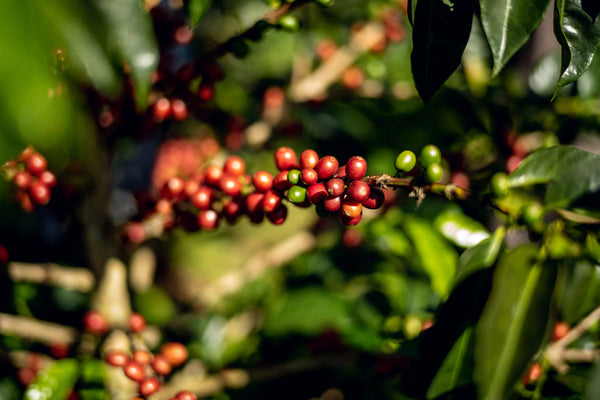
One of the things we started talking to producers about last year was their picking and processing of coffee - most people here have been in coffee for generations, but mainly producing commodity grade. The amount of work it is to pick only ripe cherry compared to strip picking, is difficult to execute, "but possible" - the conclusion to all conversations we have here. Natividad Benitez, producer of the coffee we call El Ocotillo, is one of the exemplary producers we work with here. Regardless of origin - he is doing a really good job with the picking: Ripe cherry in every basket, and a very good density sorting during the wet processing of the coffee, makes his coffee in particular clean and sweet. A lot of details needs to be in place to produce a good cup of coffee. Expect many more goodies from the region of Santa Barbara this upcoming crop - they just started picking this past week, and perhaps needless to say: we have high expectations to the arrivals of these coffees.


-Mie

Colombia

| by Mie Hansen

You haven’t heard from me in a while, but believe me - we’ve been working tirelessly on finding great coffees for all our customers. Our goal for 2011 was to develop relationships and find coffees that can offer a new perspective on the origins we work with. We’ve visited a lot of beautiful places where coffee is growing and made a lot of new connections.


The second half of November, I visited Colombia and our sourcing partner Virmax again. It was our second visit to Colombia in five months, and it was exciting to see people and places again and catch up on how their work was going.

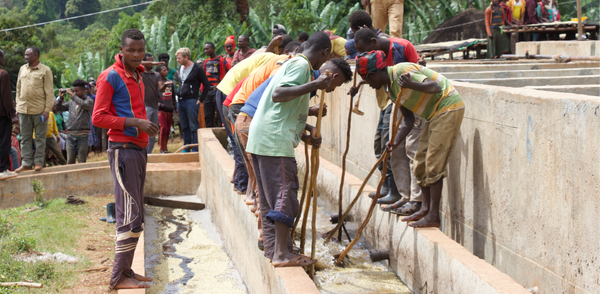
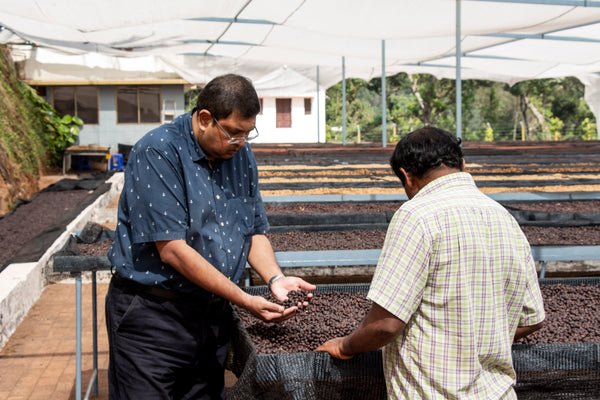
The trip started up north near Santander to visit El Roble - an organic farm I fell in love with earlier this year, not only because it is a beautiful farm but it’s also very well run. That afternoon I got to see the cherry picked during the day being delivered to the mill for processing. They do a very serious effort in making their pickers perform in picking only ripe cherry, and I learned this wasn’t only giving good results in the cup, but what they received at the mill was mainly red cherry. Also the drying part of their processing was interesting to see - they were still early in the harvest, but to make room for all the coffee they will be drying they’re using three story high raised beds - a great idea for many other farms. Found some nice coffee here, and our El Roble lot will arrive in our warehouse sometime late in January 2012.


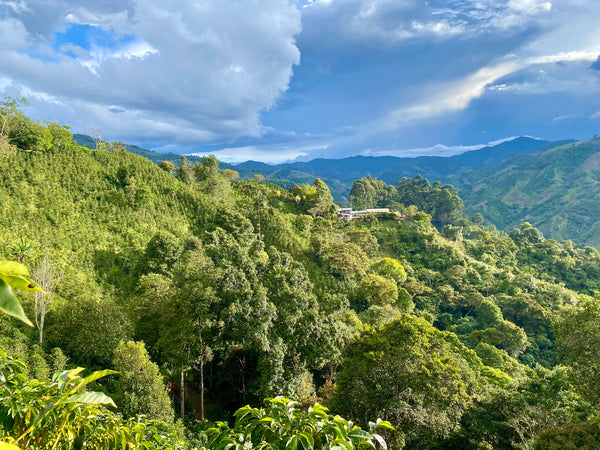
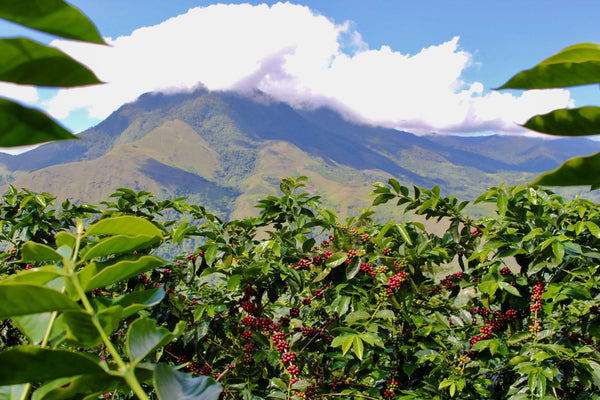
From North to South, Colombia’s coffee growing areas are around the three mountain ranges (Cordilleras) of the Andes. These mountains provide unique micro climates - creating a diverse range of flavor profiles. We have been working with the Los Cauchos producer group in San Augustin, Huila for about 12 months now using their La Serrania for decaf and Los Idolos for both our regular drip line and decaf. In addition to these old friends, we met with several producer groups from all over the southern part of Huila - El Desarrollo from Gigante, Palmar de Criollo from Pitalito and El Paraiso from Tarqui. One lot from the producers of Palmar de Criollo coming to Vancouver as well as a few micro lots from individual farms - we are excited to share these beautiful coffees with all of you sometime early in 2012!


Oh. And merry Christmas!

-Mie

Christmas Shipping Notice

| by Admin Desk

Orders placed between the 24th-26th will be shipped out on Dec 28th. Regular shipping will resume on the 28th.

PayPal Checkout

| by Admin Desk

We've now enabled PayPal as a checkout option for our customers, so if anyone prefers to use PayPal as their online payment method, feel free to do so when you're completing your orders!

Organic Coffees

| by Mie Hansen


This last weekend I got to go to San Francisco, California to judge in the Good Food Awards. Judging was done with a blind tasting of 44 submitted coffees from various roasteries around the United States. The winners of the Good Food Award for coffee will be distinguished by exemplary flavor - sweet, clean, well developed body, balanced acidity and phenomenal aromatics. To qualify for entry, roasters and coffee farmers must emphasize fairness and transparency from seed to cup, and be using third party certified organic beans.

These days, coffee certified as Organic, Fair Trade, Rainforest Alliance and many others, is everywhere. It has become mainstream, making its way from mass merchandisers to college dining halls, high-end restaurants and almost every place in between. British Columbians account for 13% of the Canadian population, but is buying a majority of the organic food products sold in the country.

Coffee thrives in a narrow belt around the equatorial line, meaning for the most part growing in less economically developed countries. Most coffee farmers in the specialty coffee niche are small holder farmers. Going through the process of becoming certified – Organic, Rainforest Alliance, Utz and many others - is expensive and out of reach for many of these farmers, not only because of the intensified labor required, but also because they actually have to buy the certificate.

On the farm where the coffee is growing, organic practices are making a big difference for the people working with the product. It is better for the soil, for the people picking it and for the waste from coffee processing. Even though the certification has been criticized for not taking quality into the equation, some organic certified coffee farmers are performing state-of-the-art farming techniques, resulting in some of the best coffees in the market. The expenses are still there, though, and often farms produce with no chemical inputs, simply because they can’t afford any sort of treatment for soil or plants.

As much as it is clearly a wise choice to choose organic, there’s another piece missing in the equation – the relationship and distance between producer and consumer. And not necessarily distance measured in kilometers - also proximity in the chain of custody and the opportunity to gain in-depth knowledge about the product for those who wishes to seek these answers. Investigate what sustainable means, and how producers have attempted to do what they do in a best possible way. I would argue, that even if all kinds of certifications are good for some things, you really need to look into the overall picture - how, where and when was it produced?

We know these things about our coffees - we want to value and reward every partner from the producer to end consumer. Our website is a great way to start looking into how and where the coffee was grown, and who grew it. See our current organic offerings here, but know we are close on to all the producers we work with.
 

1 2 3 4 Next »

Recent News


  • New Faces

    For us, it has been a really fun and exciting process - going from offering coffees produced by a selection of producers w...

    Read More

  • Guatemala Harvest 2012

    During the harvest of 2011 we ended up with coffees from two different areas of Guatemala - Huehuetenango and Antigua....

    Read More

  • Honduras Harvest 2012

    Excuse my slack behavior, but it's been a couple of those weeks where my job for once resembled what people think it i...

    Read More

  • Colombia

    You haven’t heard from me in a while, but believe me - we’ve been working tirelessly on finding great coffees for all ...

    Read More

  • Christmas Shipping Notice

    Orders placed between the 24th-26th will be shipped out on Dec 28th. Regular shipping will resume on the 28th.

    Read More